DSC (Differential Scanning Calorimetry) is simple in principle but fraught with pitfalls in practice. The melting point of the same polypropylene sample can vary by 2°C from one day to the next; unexplained “shoulder peaks” may appear; and the glass transition (Tg) step can often be elusive. The following 12 points, earned through failed curves, will help you secure reliable DSC data.
- Sample Mass: 5-10 mg is the Goldilocks Zone
- Too much (>15 mg): Poor heat transfer, leading to broadened peaks and reduced resolution.
- Too little (<2 mg): Weak signal, making the Tg step difficult to identify.
- Standard: 5-10 mg, spread as a thin layer at the bottom of the crucible (height ≤ 1/2 crucible depth).
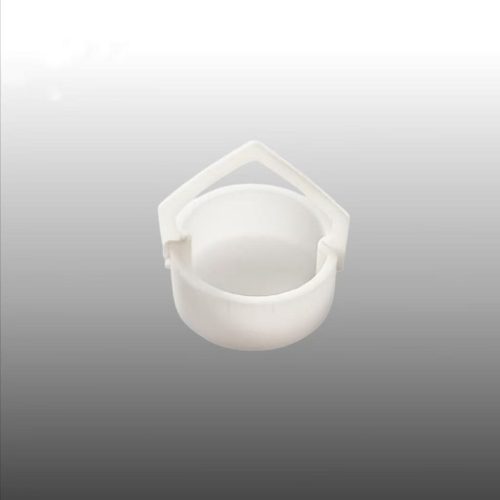
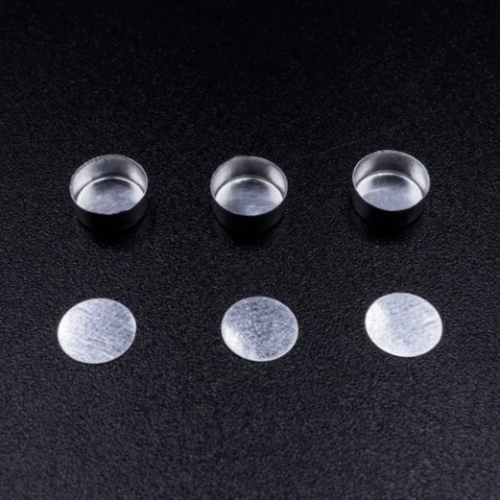
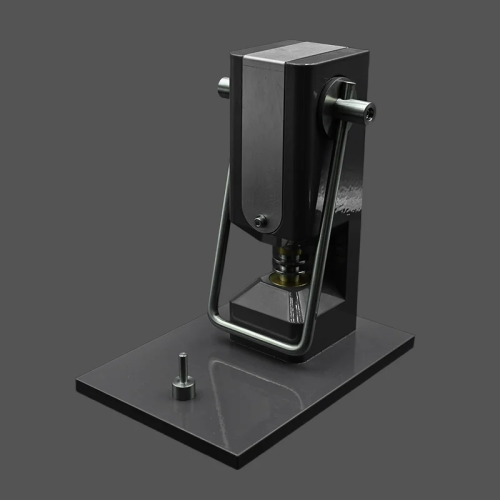
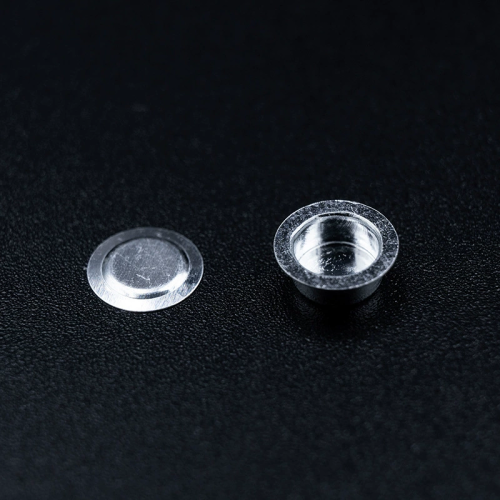
- Crucibles: Sealed Aluminum for 90% of Cases
- Routine tests: Hermetically sealed aluminum crucibles (prevents volatile loss), suitable for -50 to 300°C.
- Special needs: Platinum for high temperature (>600°C), stainless steel high-pressure crucibles for aqueous solutions.
- Key: The sample and reference crucibles must be identical in material, mass, and lid condition.
- Temperature Program: Always Run “Heat-Cool-Reheat”
- First Heat: Erases thermal history, revealing the sample’s “as-received” state.
- Cooling: Observes crystallization behavior; records crystallization temperature (Tc).
- Second Heat: Reveals the material’s “intrinsic” properties. Use the melting enthalpy from this cycle for accurate crystallinity calculation.
- Heating Rate: Doubling the rate shifts temperatures by 2-5°C
- General scanning: 10°C/min.
- Precise melting point: 1-2°C/min.
- Crucial: Heating rates must be consistent when comparing data.
- Baseline: Uncorrected Data is Just a “Rough Draft”
- Run an identical program with two empty crucibles daily or after condition changes. Save this as your baseline file.
- Always select “subtract baseline” during analysis. This is foundational for a clean curve.
- Glass Transition (Tg): Techniques to Reveal the “Step”
- Tg is a shift in the baseline, not a peak. Report the onset or midpoint.
- If the signal is weak: Increase sample mass (10-15 mg) or use a faster heating rate (20°C/min).
- Data from the second heating cycle effectively avoids interference from thermal history.
- Melting Peak (Tm) & Crystallinity: Use the Right Formula
- Double/Shoulder Peaks: May indicate different crystal forms or melt-recrystallization.
- Core Crystallinity Formula:
Crystallinity (%) = [Sample Melting Enthalpy – Cold Crystallization Enthalpy] / [Melting Enthalpy of 100% Crystalline Polymer] × 100%
- Remember: Use the melting enthalpy from the second heat and consult literature for the standard enthalpy value.
- Atmosphere: Right Gas, Stable Flow
- Standard purge gas: Nitrogen (N₂), 50 mL/min flow rate.
- Oxidation studies: Must use air or oxygen.
- Flow fluctuations cause baseline drift.
- Sample Preparation: Ensure Good Thermal Contact
- Film/Fibers: Cut into pieces <2 mm. Never place a whole piece.
- Bulk solids: Cut into thin slices (<0.5 mm).
- Hygroscopic samples: Must be dried under vacuum prior to testing.
- Modulated DSC (MDSC): The Tool for Complex Problems
- Use when Tg overlaps with relaxation, or when melting and degradation occur simultaneously.
- It separates the total heat flow into reversing (e.g., Tg, melting) and non-reversing (e.g., curing, degradation) components.
- Calibration: The Foundation of Data Integrity
- Temperature Calibration: Weekly, using standards like Indium (In), Tin (Sn).
- Heat Flow Calibration: Monthly, using the melting enthalpy of Indium.
- Mandatory after long instrument idle times.
- Data Processing: Treasure the Raw Data
- Export raw data (.csv) for processing. Use software smoothing functions cautiously.
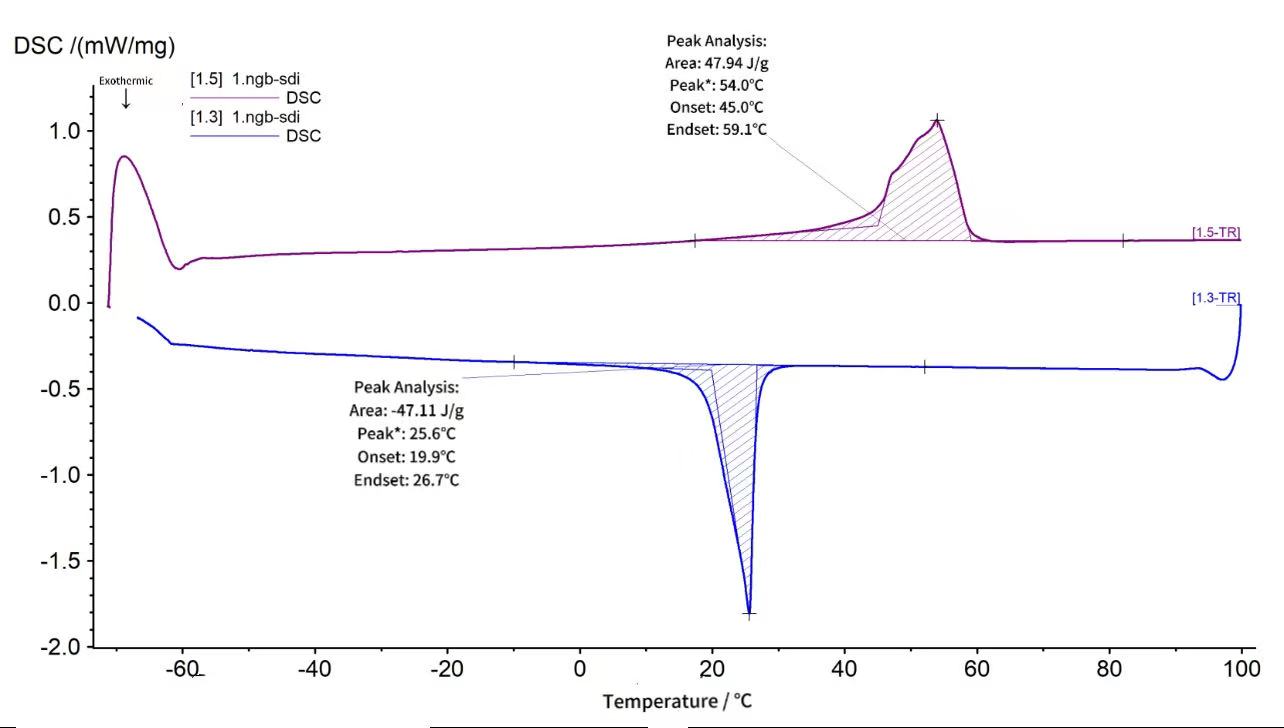
- In reports, always specify: heat flow sign convention (exo up/down), baseline method, and smoothing parameters.
The precision of DSC lies in every detail: from milligram-scale weighing and crucible sealing to program settings and baseline subtraction. Mastering these variables yields not just a curve, but a faithful narrative of your material’s thermal story.