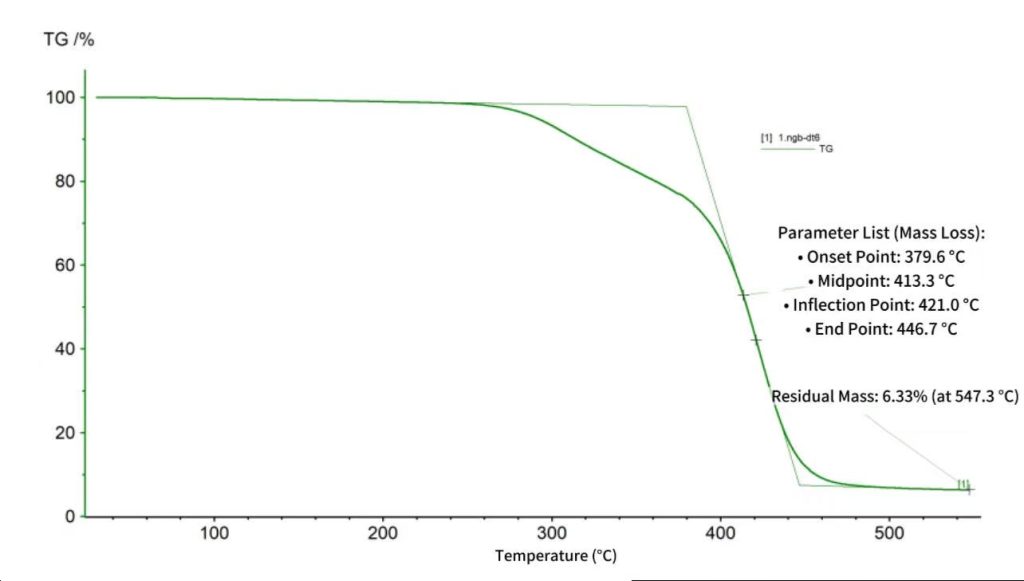
Many researchers experienced with Thermogravimetric Analysis (TGA) are familiar with this frustration: the decomposition temperature of the same sample reads 350°C in the morning but shifts to 340°C in the afternoon; the weight-loss steps on the curve often appear blurred, as if smudged; and perhaps most disheartening—having a manuscript challenged by reviewers with a simple comment: “The TGA baseline was not corrected.”
TGA is the “fingerprint” of a material’s thermal stability, but issues like baseline drift, unclear steps, and poor data reproducibility can compromise results. Mastering the following 13 details is key to obtaining clean and reliable TGA data.
- Sample Mass: 5-15 mg is the General Rule
- Too much (>20 mg): Poor heat transfer, causing delayed decomposition temperatures and broadened or shouldered DTG peaks (artifacts).
- Too little (<2 mg): Weak signal, making weight loss steps unclear.
- Guideline: Spread the sample as a thin layer at the crucible bottom, with a height not exceeding 1/3 of the crucible depth.
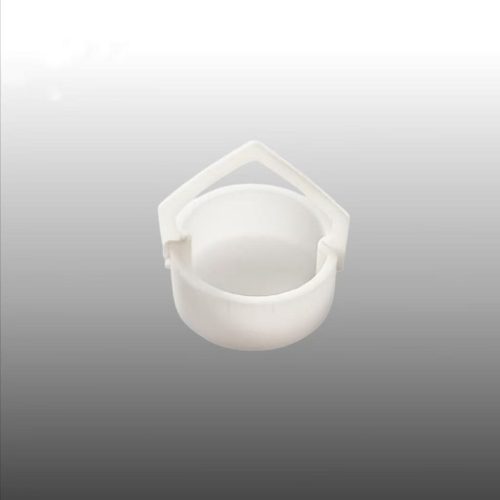
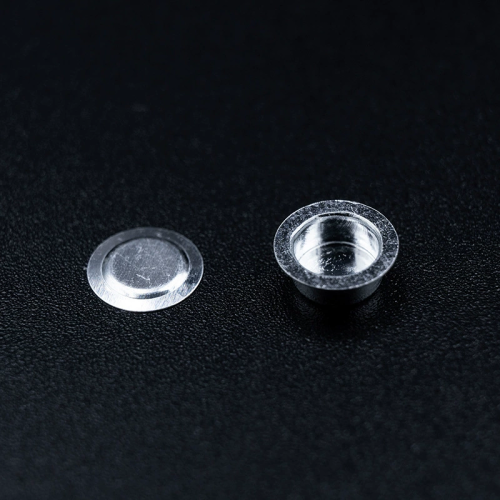
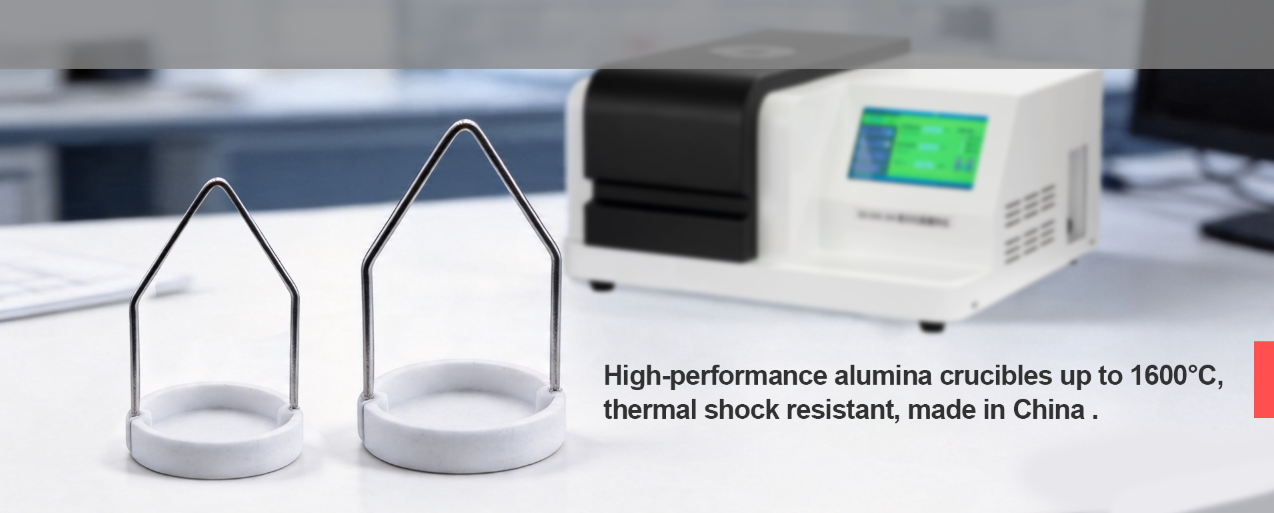
- Crucible Selection: Material is Paramount
- Universal Choice: Alumina (Al₂O₃) crucibles, suitable for most polymers and inorganics.
- Special Cases:
◦ Fluorine/Halogen-containing samples: Avoid alumina (corrosion risk), use platinum or zirconia crucibles.
◦ High-temperature alloys: Use platinum with caution (risk of alloy formation).
- Pre-test: When in doubt, test with alumina first and check for crucible corrosion or residue.
- Atmosphere: Defines What You Measure
- Nitrogen (N₂): Inert atmosphere, measures thermal decomposition temperature and char yield.
- Air/Oxygen: Oxidative atmosphere, measures oxidative decomposition temperature and ash content.
- Critical: Ensure high gas purity and stable flow rate (typically 50-100 mL/min). Flow fluctuations cause baseline drift.
- Heating Rate: Directly Affects Decomposition Temperature
- Routine testing: 10°C/min (balances signal strength and resolution, ensures comparability).
- Resolving overlapping steps: 1-5°C/min (low rate improves resolution).
- Kinetic analysis: Requires multiple rates (e.g., 2, 5, 10, 20°C/min).
- Important: Faster heating rates yield higher measured decomposition temperatures (thermal lag). Use identical heating rates when comparing data.
- Baseline Correction: Uncorrected Data is Invalid
- Why: The crucible’s own weight change and the buoyancy effect cause baseline drift.
- Correct Practice: Always run a baseline with an empty crucible using the identical program before testing or after changing conditions, and subtract it during analysis.
- Consequence: Neglecting correction can cause errors in char yield up to 2-5%.
- Sample Pre-treatment: Remove Interferences
- Many samples (e.g., biomass, hydrogels) contain adsorbed water, causing a weight loss step near 100°C that interferes with analysis.
- Solution: Include an isothermal hold at 105°C for 10-20 minutes at the start of the program, waiting for weight stabilization before ramping.
- Buoyancy Effect: Identify and Correct “Apparent Weight Gain”
- Phenomenon: A slow upward drift (“weight gain”) appears at high temperatures (e.g., >600°C).
- Nature: A physical effect due to decreasing gas density with temperature, not a chemical reaction.
- Solution: This effect is completely eliminated by empty crucible baseline correction.
- Gas Lines: Purge vs. Protective Gas
- Purge Gas: Flows over the sample, carrying away decomposition products and preventing secondary reactions. Use higher flow (~50-100 mL/min).
- Protective Gas: Flows into the balance chamber to shield the microbalance. Use lower flow (~20-30 mL/min).
- Common Error: Improper flow ratio can let corrosive products into the balance chamber or cause product retention, affecting char yield.
- Sample Form and Placement: Ensure Uniform Heat Transfer
- Powder: Sieve for uniform particle size.
- Film/Fiber: Cut into small pieces (<2mm), never place as a whole sheet.
- Placement: Use tools to position the crucible in the exact same spot in the furnace each time, avoiding contact with the wall or thermocouple.
- Simultaneous Thermal Analysis (STA): Pros and Cons
- Advantage: Obtains mass change (TGA) and thermal effect (DSC) data simultaneously.
- Note: The specialized STA crucible (often lidded with a pinhole) has higher thermal resistance, reducing DSC signal sensitivity and temperature accuracy. For precise melting or glass transition data, perform a separate DSC test.
- Data Processing: Use Smoothing Judiciously
- Export raw data (.csv) and process with dedicated software (e.g., Origin).
- Smoothing Trap: Over-smoothing erases real small weight loss steps and alters DTG peak shape. If needed, use the Savitzky-Golay algorithm with a window point number ≤5%.
- Calculating Decomposition Temperature: Use the tangent method to determine the onset temperature, not visual estimation.
- Instrument Validation: Regular Calibration with Standards
- Standard Material: Calcium oxalate monohydrate is recommended. Its three distinct, well-defined weight loss steps (dehydration, carbonate decomposition, calcium carbonate decomposition) are ideal for validating temperature accuracy and mass loss percentages.
- Frequency: Perform monthly or after changing critical components (e.g., thermocouple).
- Data Interpretation: Utilize the DTG Curve
- The DTG curve (first derivative) clearly reveals the temperature of maximum decomposition rate and helps separate overlapping weight loss steps.
- Note: DTG is extremely sensitive to noise. Ensure the original TGA curve is sufficiently smooth before differentiation.
A trustworthy TGA curve starts with meticulous sample preparation, is achieved through precise parameter settings, and is finalized with careful data processing. Mastering these details yields not just data, but profound and accurate insight into your material’s thermal behavior.